
| The First Place to Look for "Nuggets" About the Bible... on the Internet! |
|---|

Genesis Overview
The first book of the Bible is Genesis and is concerned with the beginning or origin of all things. Genesis as the beginning forms the foundation of the Bible, on which everything is built. Most Biblical scholars accept that Moses wrote most if not all of the first five books (called the Pentateuch) under divine inspiration from GOD Almighty.

While it is easy to accept that Genesis is concerned with the beginning of man's history, it is more important to realize that it is GOD's revelation on how the world was created, how man was created, how man sinned and most importantly how redemption is made possible.
And I will put enmity between thee and the woman, and between thy seed and her seed; it shall bruise thy head, and thou shalt bruise his heel. Genesis 3:15
Chapter Reference |
Subject |
1 thru 2 |
Creation |
3 |
Rebellion of Adam & Eve |
4 |
The First Murder |
5 |
The Descendents of Adam |
6 thru 9 |
Noah and the Flood |
10 |
Descendants of Noah |
11 |
Introduction of Different Languages |
Chapter Reference |
Subject |
12 thru 18 |
Abraham's Faith and Wandering |
19 |
Destruction of Sodom & Gomorrah |
20 |
Abraham's Lapse in Faith |
21 |
The Birth of Isaac |
22 |
Abraham's Faith Confirmed |
23 |
The Death of Sarah, Abraham's Wife |
24 |
Finding a Wife for Isaac |
25 |
The Birth of Jacob and Esau |
26 |
Isaac and Abimelech |
27 thru 28:4 |
Isaac Blesses Jacob |
28 |
Jacob Flees From Esau |
29:1 thru 30:24 |
Jacob Marries Leah and Rachel |
30:25 thru 31:55 |
Jacob and Laban |
32 & 33 |
Jacob and Esau Meet |
34 |
The Dinah Incident |
35 |
Jacob Returns to Bethel |
36 |
Esau's Descendents |
37:1 thru 37:11 |
Joseph Dreams of Greatness |
37:12 thru 38 |
Joseph Sold by his Brothers |
38 |
Judah and Tamar |
39 thru 45 |
Joseph in Egypt |
46 thru 49:28 |
Jacob and His Other Sons go to Egypt |
49:29 thru 50 |
Death of Jacob and Joseph |
And Moses said unto God, Behold, when I come unto the children of Israel, and shall say unto them, The God of your fathers hath sent me unto you; and they shall say to me, What is his name? what shall I say unto them? And God said unto Moses, I AM THAT I AM: and he said, Thus shalt thou say unto the children of Israel, I AM hath sent me unto you. And God said moreover unto Moses, Thus shalt thou say unto the children of Israel, The LORD God of your fathers, the God of Abraham, the God of Isaac, and the God of Jacob, hath sent me unto you: this is my name for ever, and this is my memorial unto all generations. Exodus 3:13-15
It is in Exodus that GOD makes Himself known by His memorial name. Even this revelation indicates His infinite greatness. What is GOD's name? Did Jesus ever use this name?
Chapter Reference |
Subject |
1:1 thru 1:7 |
Introduction |
1:8 thru 22 |
Slavery in Egypt |
2:1 to 4 |
Preparation of the deliverer |
5 thru 7: 7 |
The Mission of Moses to Pharaoh |
7:8 thru 11 |
GOD's wonders in the land of Egypt |
12 |
The Passover and the departure of Israel |
12 |
Israel crossing the Red Sea and in the wilderness |
Chapter Reference |
Subject |
19 thru 24:11 |
Establishment of the covenant at Sinai |
24:12 to 31 |
Directions for the Tabernacle and the Priesthood |
32 to 34 |
The covenant broken and restored |
35 to 39 |
Building of the Tabernacle |
40 |
Erection and consecration of the Tabernacle |
Leviticus Overview
Leviticus takes its name from one of the 12 sons of Jacob, Levi, whose family was chosen by GOD to act as priests and assistants in the Tabernacle. The book covers the national and personal laws given by GOD to the Jewish people regarding worship and religious activities. It contains laws regarding cleanliness, morality, ethics and hygiene, which guided the Jews on a day-to-day basis and still does today. Animal sacrifice was introduced as a covering for the individual and national sins of the people.
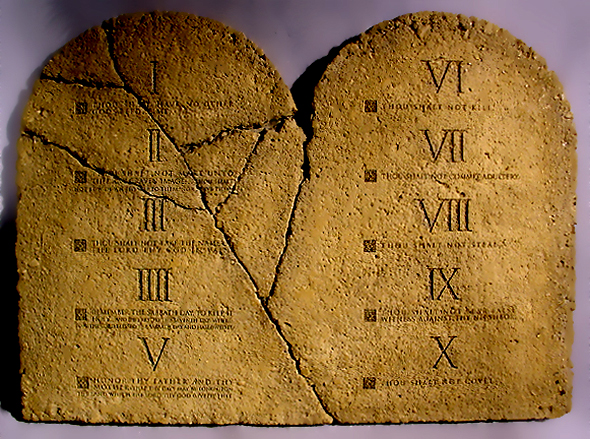
The most significant aspect of Leviticus in our contemporary society is that it points forward to the way in which followers of Jesus should endeavor to live their lives. Leviticus contains details of the sacrifices and offerings, which were required to be made by the people in recognizing their complete dependence on GOD and the necessity to continually honor Him. There were sacrifices and offerings to be made for a wide variety of reasons. Some were made as a recognition of sin; others were "free- will" offerings, which, as the name implies, were offerings made to GOD for no other reason than that the people wanted to worship Him.
I beseech you therefore, brethren, by the mercies of God, that ye present your bodies a living sacrifice, holy, acceptable unto God, which is your reasonable service. Romans 12:1
Chapter Reference |
Subject |
1 thru 7 |
The offerings (burnt, meal and fruit, peace, sin, trespass) |
8 thru 10 |
The priesthood |
11 thru 16 |
The people |
17 |
The altar |
Chapter Reference |
Subject |
18 thru 20 |
Regulations for the people |
21 thru 22 |
Regulations for the priests |
23 thru 24 |
Regulations for the nation |
25 thru 27 |
Regulations for the land |
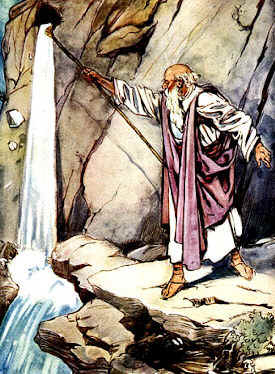
In the book of Numbers we can see the first of many instances in the Old Testament when GOD's people choose to ignore Him and to worship other "gods".
Chapter Reference |
Subject |
1 |
Census of warriors |
2 |
Order of worshippers |
3 thru 4 |
Service of workers |
5 |
The camp cleansed from defilement |
6 |
Separated to GOD |
7:1 thru 7:88 |
Cooperating with GOD |
7:89 thru 10:10 |
GOD with his people |
Chapter Reference |
Subject |
10:11 thru 10:32 |
Journeying at GOD's command |
11 thru 12 |
Murmuring and discontent |
13 thru 14 |
Lack of faith and rejection |
15 |
Instructions for the next generation |
6 thru 19 |
Revolt against GOD's appointments |
Chapter Reference |
Subject |
20 thru 21:3 |
The fortieth year: From Kadesh to Hor |
21:4 thru 22:1 |
To Moab via Ezion-Geber |
22:2 thru 25:18 |
Balaam's curse turned into a blessing |
26 thru 36 |
Preparations to enter the Land |

For whatsoever things were written aforetime were written for our learning, that we through patience and comfort of the scriptures might have hope. Romans 15:4
Deuteronomy Outline
Chapter Reference |
Subject |
4:44 to 5:33 |
Review of the Divine covenant |
6 to 26 |
What the covenant demands |
Chapter Reference |
Subject |
27 |
A ceremony of remembrance in the Land |
28:1 thru 28:14 |
The blessings of the Law |
28:15 thru 28:68 |
The curses of the Law |
Chapter Reference |
Subject |
29:1 thru 29:8 |
review of the past |
29:9 thru 29:29 |
Warning against disobedience |
30 |
Divine mercy in spite of failure |
Chapter Reference |
Subject |
31:30 thru 32:47 |
Song of Moses |
32:48 thru 32:52 |
Sequel to the Song - compare with Exodus 15 |
Chapter Reference |
Subject |
33:1 thru 33:5 |
Introduction |
|---|---|
33:6 thru 33:25 |
The blessings |
33:26 thru 33:29 |
The source and summary of the blessings |

The First Place to Look for "Nuggets" About the Bible... on the Internet!